VietNat
VIETNAT TenderSole Daily Repair Cream for Ages 60+| For dry, rough, thickened heels with Urea + Vietnamese Coconut Oil & Rice Bran Oil| 4 FL OZ / 113 G
VIETNAT TenderSole Daily Repair Cream for Ages 60+| For dry, rough, thickened heels with Urea + Vietnamese Coconut Oil & Rice Bran Oil| 4 FL OZ / 113 G
Couldn't load pickup availability
VIETNAT TenderSole · For ages 60+
Twenty per cent urea. No salicylic acid.
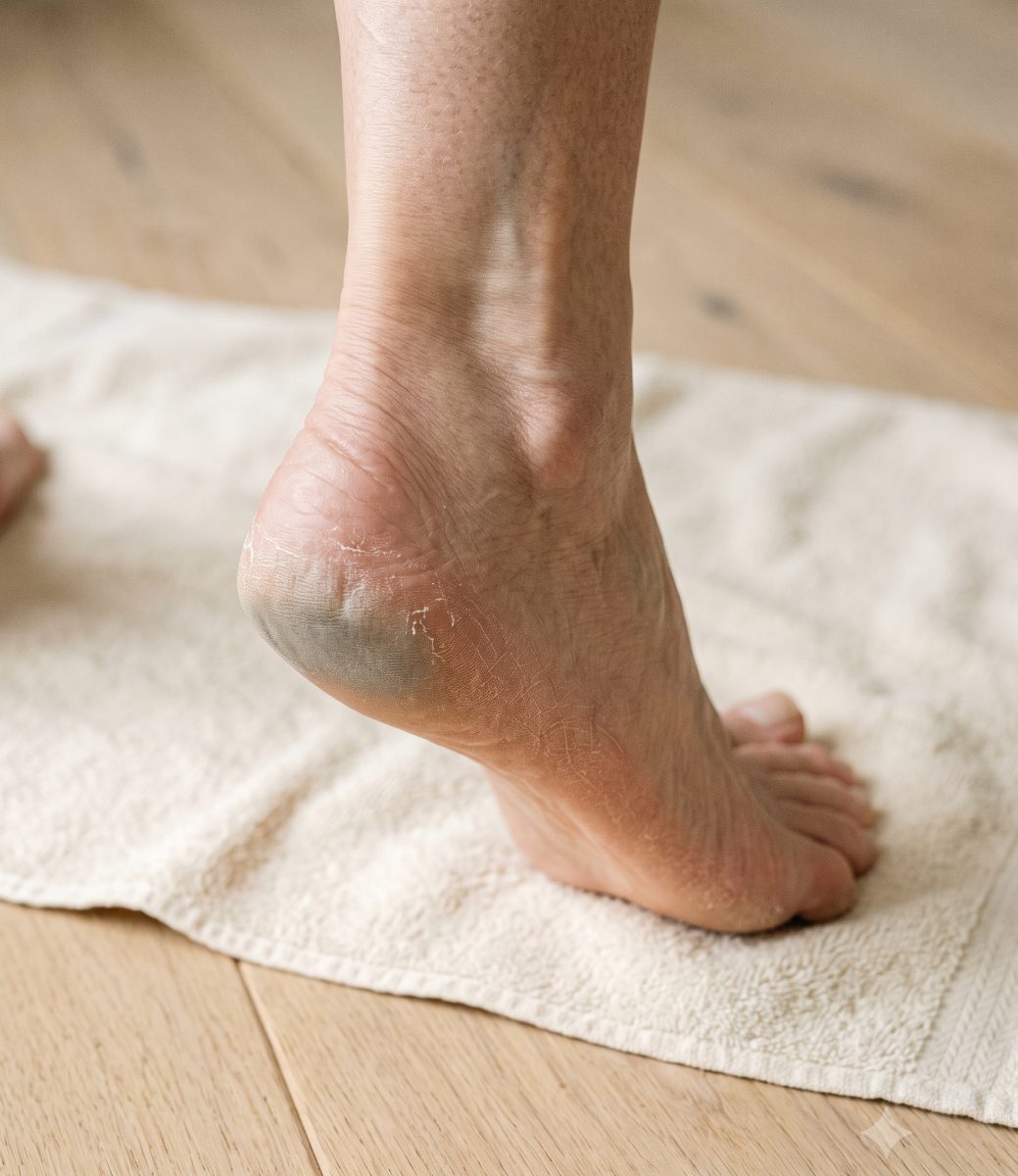
TenderSole Daily Repair Cream smooths and softens dry, rough, thickened heels — made for skin at sixty and beyond, when feet stop looking after themselves.
Urea is the ingredient with the real evidence behind it for heel skin, and twenty per cent is enough to work. What is deliberately not in it matters just as much: no salicylic acid, so this is a cosmetic cream you can use every day rather than a strong treatment you use with caution.
Alongside the urea, Vietnamese coconut oil to seal the moisture in and rice bran oil for vitamin E — two things Vietnamese households have used on skin for generations.
In a stand-up tube with a flip-top cap a fifth wider than standard, and a textured grip that holds in a wet hand.
Strong enough to work. Gentle enough for every day.
Why heels go first
The one part of you that carries your whole weight.
Cracked heels affect somewhere between 20 and 40 per cent of people, and the rate peaks between fifty and seventy. Past sixty-five it runs two to three times higher than in younger adults. Three things happen at once: oil glands slow down, the surface layer renews itself more slowly, and collagen cross-linking makes the skin stiffer. Then it takes your body weight, every step, all day.
Dry air makes it worse in a way that is easy to underestimate. Below about 40 per cent humidity, water loss through the skin rises by as much as 60 per cent — which is why heels are usually worst in winter and in air conditioning.
Urea works on exactly that. It breaks the hydrogen bonds in the outer layer of skin so it can hold water again. That is a different mechanism from a strong chemical exfoliant, and it is the one with the clinical trials behind it: reviews of urea in this use report 60 to 85 per cent of people responding, and in one trial of 167 patients, 46.3 per cent healed completely at four weeks against 33.3 per cent on placebo.
What is not in it
Why there is no salicylic acid, and why that is the point.
Walk the heel-cream aisle and you will see a lot of jars pairing very high urea with two per cent salicylic acid, often labelled maximum strength. They sell extremely well. But adding salicylic acid at that level pushes a product out of cosmetics and towards being a drug — and formulations of that kind appear in the FDA's own label database marked as unapproved drugs, meaning they have not been reviewed for safety and effectiveness for that use.
We took the other road on purpose. TenderSole is a cosmetic cream, plainly and completely: urea as the active, oils and humectants around it, and nothing that requires a caution label. That is what makes it something you can put on every single night for a year without thinking about it.
It also means we will not tell you it removes calluses or corns. Those are medical claims with their own FDA rules, and this cream does not make them. It smooths and softens rough, thickened skin, which is what most people actually need.
Is this the right product for you
Two of these three, we can help with. The third needs a doctor.

Yes — this is for you
Dry, flaking, no real splits
Rough to the touch, catches on a bedsheet, white flaking at the rim. Twice a day is the whole answer.
Yes — this is for you
Thickened, with fine surface lines
A hard pad across the heel with shallow lines in it, maybe tender by evening. Twenty per cent urea is aimed here.
No — see a doctor first
Deep splits, bleeding, or signs of infection
That is beyond what a cosmetic cream should be asked to do, and it needs proper care. If you have diabetes, speak to your doctor before treating any foot skin problem.
What is in it
One active that works, and three things that keep it kind.
Urea does the softening. Everything else in the formula exists so that twenty per cent urea does not leave mature skin tight, stinging or stripped.
The active · 20%
Urea
Humectant and keratolytic
Breaks the hydrogen bonds in hardened surface skin so it holds water again. Twenty per cent is the level clinical reviews put in range for rough, thickened heels.
Vietnamese ingredient
Coconut Oil
Cocos nucifera oil · 3–5%
Goes on after the urea has drawn water in, and seals it there. The oil Vietnamese families have reached for long before anyone called it an occlusive.
Vietnamese ingredient
Rice Bran Oil
Oryza sativa bran oil · 1–2%
Pressed from the bran left over from milling rice. High in vitamin E, light on the skin, and a genuine by-product rather than a marketing flourish.
Barrier support
Ceramide NP + Sodium PCA
Barrier lipid + natural moisturising factor
Softening the surface without rebuilding the barrier underneath just leaves it exposed. These two are the other half of the job.
Panthenol and allantoin settle the skin; the whole thing is buffered to pH 4.5–5.5, which is where urea works best and where skin is most comfortable. No fragrance, no salicylic acid, no menthol.

Compared with the category
How it differs from the rest of the heel-cream shelf.
| VIETNAT TenderSole | Typical heel cream | |
|---|---|---|
| Active | Urea 20%, stated on the front | Very high urea with salicylic acid, or glycerin alone with no keratolytic at all |
| Salicylic acid | None — cosmetic, not a drug | Common at 2% in the best-selling formulas |
| Barrier support | Ceramide NP + sodium PCA | Often none |
| Oils | Vietnamese coconut and rice bran, named | “Aloe, tea tree” with no origin given |
| The pack | Stand-up tube, oversized flip-top, textured grip, large type | Standard jar or tube, small screw cap, small print |
| Who it says it is for | Ages 60+, on the front of the tube | Everyone, at every age |
Comparison drawn from our own category review, August 2026. It describes the category, not one named competitor.
The tube
Designed around the hands that have to open it.
Every cream in this aisle is bought largely by people over sixty. Almost none of them are packaged like it.
Flip-top, a fifth wider than standard
Opened with a thumb, one-handed, sitting on the edge of the bed. No small screw cap to twist with arthritic fingers.
Textured grip, stands on its base
It does not slide out of a damp hand, and it stands cap-down so the cream is always at the nozzle.
Type you can actually read
The strength, the oils and the volume are set large and high-contrast on the front, and the back panel is a point larger than the industry habit.

How to use
Twice a day, and socks at night.
01
A strip into one palm
Best on clean, slightly damp skin — urea works with the water that is already there.
02
Work it into the heel and rim
Massage until it stops looking white. The rim and the edges of the heel are where the roughest skin sits.
03
Cotton socks after the evening one
Socks keep the cream on the heel rather than on the sheet. Give it a few weeks of not skipping days.


If you are buying it for yourself
You have probably tried petroleum jelly and an ordinary body lotion, and neither did much for a heel this hard. This has a real active in it, and it is still gentle enough for tonight and every night after.
If you are buying it for a parent
Nothing on the tube says maximum strength or sixty per cent, because it does not need to. It opens with a thumb, the front is readable across a room, and it is easy to explain down a phone line.
Key benefits
- Urea 20% — the active with the trials behind it
- No salicylic acid, no menthol, no fragrance
- Vietnamese coconut oil and rice bran oil
- Ceramide NP and sodium PCA for the barrier
- Made for ages 60+, said on the front
- Oversized flip-top cap, textured grip
- Safe for daily, long-term use
Ingredients (INCI)
Aqua (Water), Urea (20%), Glycerin, Cetearyl Alcohol, Glyceryl Stearate, Cocos Nucifera (Coconut) Oil (Vietnamese), Oryza Sativa (Rice) Bran Oil (Vietnamese), Sodium PCA, Ceramide NP, Panthenol, Allantoin, Phenoxyethanol + Ethylhexylglycerin, Citric Acid.
No salicylic acid, no added fragrance, no menthol, no parabens, no formaldehyde-releasing preservatives. pH 4.5–5.5.
For external use only. Do not apply to broken, split or bleeding skin. Avoid contact with eyes and rinse thoroughly if contact occurs. A patch test is recommended before first use. Discontinue use if irritation occurs. Keep out of reach of children. If you have diabetes, consult a doctor before treating any foot skin condition. Not intended to diagnose, treat, cure, or prevent any disease.
Questions
Answers, in plain terms.
Why only 20% urea when others sell 40 or 60?
Because 20 per cent is the range clinical reviews support for rough, thickened heels, and it lets us leave out salicylic acid entirely. A higher number on the front is easy to print. It is not the same thing as a better result, and it usually comes with a caution.
Does it remove calluses?
We will not say that, because callus and corn removal is a regulated drug claim with its own labelling rules. What this cream does is smooth and soften rough, thickened, dry skin, used daily.
Will it sting?
On intact dry skin, most people feel nothing. Urea can tingle briefly where skin is split, so do not use it on open cracks — that needs a doctor rather than a cream.
I have diabetes. Can I use it?
Ask your doctor before you treat any foot skin problem. Feet need closer attention with diabetes, and that advice should come from someone who knows your case, not from a product page.
How long before I notice a difference?
The surface usually feels smoother within the first week. Real change in a thickened heel takes several weeks of using it consistently — in the trials on urea, results were measured at four weeks.
Can I use it on my hands or elbows?
Yes, on rough, thickened patches. It is formulated for the thicker skin of the feet, so keep it off the face.
Is it greasy?
It is richer than a body lotion, because heels need that, but it sinks in rather than sitting on top. Socks after the evening application solve the rest.
How long does one tube last?
4 FL OZ / 113 G. Used twice a day on both heels, most people get about two months from it.